
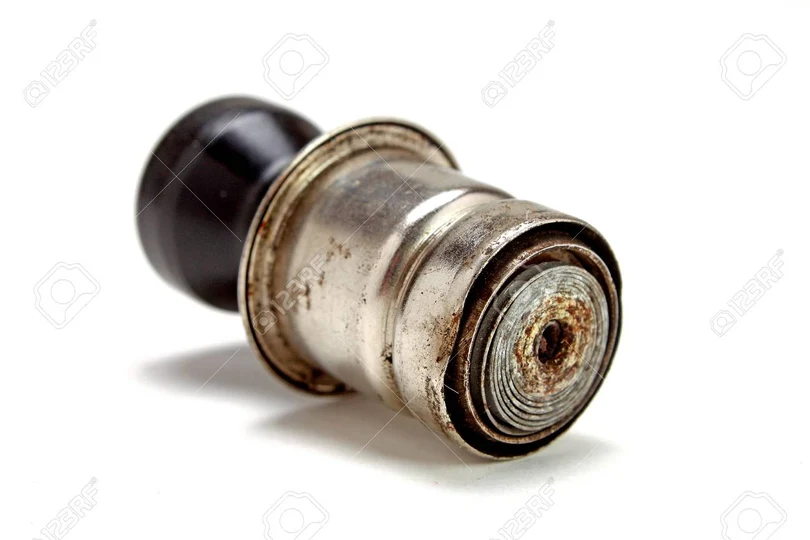

What Do you Call It?
Which do you think is correct name, Cigar Lighter or Cigarette Lighter? Technically, both are correct historically. “Cigar lighter” is the older term used by early auto makers, while “cigarette lighter” became the universal standard by the 1950s as those became the dominant tobacco product.
For decades, almost every car came equipped with a small cylindrical device on the dashboard or console that glowed orange-hot when pushed in. 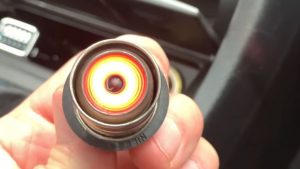 Drivers and passengers called it a cigarette lighter. Some, especially in older literature, service manuals, and among certain enthusiasts, still refer to it as a cigar lighter. Both names are historically accurate, and the distinction reveals how the device evolved.
The electrical lighter traces back to the early 1880s. Swiss-Austrian inventor Friedrich Wilhelm Schindler patented an early version, and by the 1890s these tools were sold in European catalogs specifically as electrical cigar lighters (*Cigarrenanzünder* or *Zigarrenanzünder*). The heating element was sized for a standard cigar diameter—approximately 21 millimeters (about a 52-ring gauge).
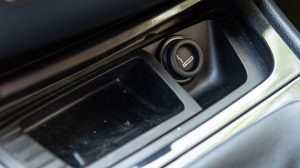 Cigarettes later overtook cigars in popularity, especially after World War I. The common name shifted to “cigarette lighter,” yet the physical dimensions stayed the same.
In the United States, automotive versions began appearing in some cars around 1925–1926 and became a standard feature by the 1950s. The Connecticut Automotive Specialty Company (Casco) played a major role, patenting an early automotive design in 1928 and later refining the automatic pop-out “V-coil” version that most people remember.
In short, it started life as a cigar lighter and kept that size even after the everyday name changed to cigarette lighter. Many factory service manuals and parts catalogs continued to list it under “cigar lighter” long after public usage had shifted.
Here’s how it worked.
The unit consisted of a removable plug containing a thin coil of nichrome wire. Pushing the knob inward completed a circuit that drew roughly 10 amperes. Within seconds the coil heated to a bright orange glow. A bimetallic strip then released the spring-loaded plug so it popped outward, ready for use. The same socket, once the heating element was removed, became the familiar 12-volt auxiliary power outlet still found in many vehicles today.
So why did the heating element vanish from newer cars?
The dedicated lighter (the heating plug itself) began disappearing from new vehicles in the mid-to-late 1990s and was largely gone by the early 2000s. Several clear, overlapping reasons drove the change:
- Sharp decline in smoking rates.
- Adult cigarette smoking in the United States fell from roughly 42 percent in the mid-1960s to well under 15 percent in recent years. With far fewer drivers and passengers lighting up, the feature lost everyday relevance.
- Safety and liability concerns.
- The glowing-hot coil posed burn and fire risks if left unattended, mishandled, or accessed by children. Manufacturers faced potential liability exposure and chose to eliminate the heat source.
- Shift in power needs.
- Drivers increasingly wanted reliable electricity for phones, GPS units, dash cams, portable refrigerators, and other electronics. A plain 12-volt socket (often labeled “power outlet” and fitted with a plastic cover) or USB ports served that purpose better and more safely than a socket designed to generate extreme heat.
- Interior design and cost.
- Today the 12-volt auxiliary power outlet remains common in many vehicles (sometimes more than one, including rear and cargo locations), but it almost never includes the heating element. Newer cars increasingly rely on USB-A, USB-C, and wireless charging pads instead. Aftermarket lighter plugs can still be purchased for classic-car restorations or for owners who specifically want the heating function, and some luxury or older-model vehicles retained the feature longer as an option.
The car lighter is a small but telling example of how automotive design follows changes in technology, daily habits, and safety expectations. What began as a convenient way to light a cigar or cigarette became, for most drivers, simply a power socket—and then, in many cases, yielded to even more modern connectors.
Be First to Comment